English
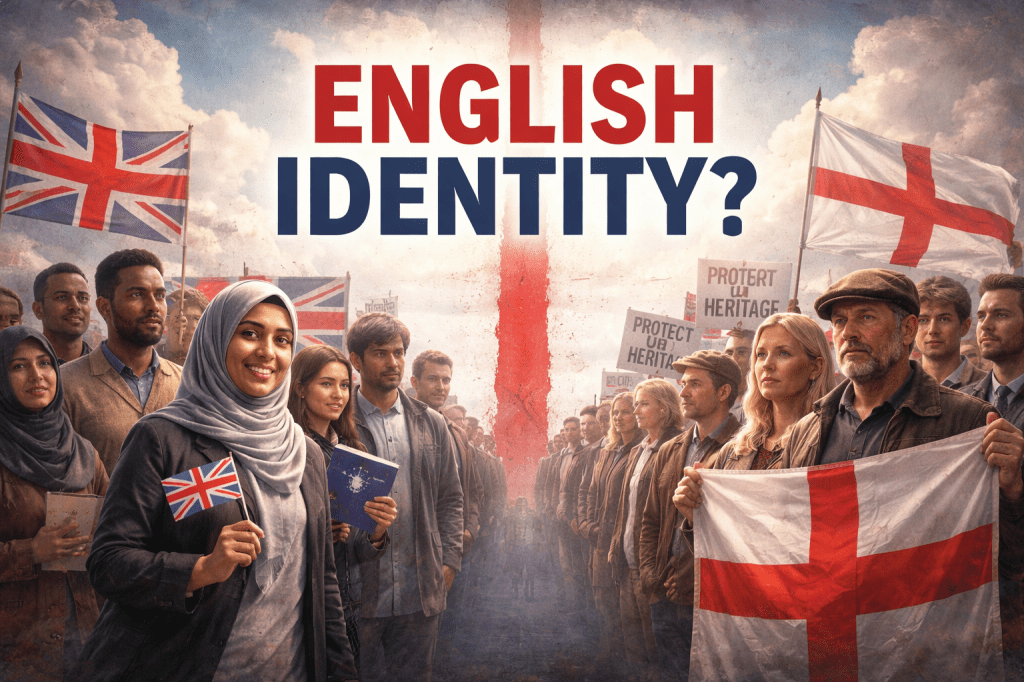
In modern Britain, few cultural questions provoke as much disagreement as the meaning of the word “English.” Is it primarily a civic identity open to anyone who lives in England and adopts its institutions, or does it refer to a historic people shaped by ancestry, culture, and centuries of shared development? The debate resurfaced recently when Shabana Mahmood—a senior figure in the Labour Party—said that she considers herself English and argued that English identity should include people who “look like” her as well as those whose roots stretch back many generations.
Her statement illustrates a broader shift in how national identity is understood in Britain today. For some, it reflects a modern and inclusive definition of nationhood. For others, it highlights a growing tension between a civic definition of nationality and the historical understanding of the English people as a distinct cultural community.
The Historical Meaning of “English”
Historically, the term “English” referred to a people who emerged in early medieval Britain. The foundations of English identity developed after the migration of Germanic tribes such as the Angles, Saxons, and Jutes in the early centuries following the collapse of Roman rule. Over time these groups blended with existing populations and formed a distinct culture, language, and political society that eventually became the Kingdom of England.
Across centuries, English identity came to include a range of cultural elements:
The English language
Shared historical experiences such as the Norman Conquest and the formation of Parliament
A legal and political tradition rooted in institutions like common law
Cultural symbols such as the cross of St. George
For much of history, these elements formed the basis of a peoplehood tied both to territory and to heritage. Identity was not solely a matter of legal citizenship but also of historical continuity.
The Rise of Civic National Identity
In the twentieth and twenty-first centuries, however, many political leaders began to emphasize a different understanding of national identity. Under this view, a nation is primarily defined by shared civic values—laws, institutions, and democratic principles—rather than ancestry.
Supporters of this model argue that modern societies are inherently diverse and that national identity must evolve accordingly. In this framework, someone born and raised in England who participates fully in its civic life can legitimately call themselves English regardless of ethnic background.
Politicians such as Shabana Mahmood have expressed this idea explicitly. Their position reflects a broader trend within parts of British political culture that seeks to redefine Englishness as an inclusive, civic category rather than an ethnic or historical one. This idealogy is distinct to European countries, while other countries seek to Preserve their ethnic identity.
Why the Debate Is Intensifying
The disagreement between these two interpretations of national identity has grown more visible for several reasons.
1. Demographic change.
Britain has experienced significant immigration over the past several decades. As communities become more diverse, questions about cultural integration and identity naturally become more prominent in public discourse.
2. Political polarization.
National identity has become intertwined with broader political debates about globalization, immigration policy, and sovereignty.
3. Cultural continuity concerns.
Some critics argue that redefining national identity too broadly risks weakening the historical and cultural continuity that originally formed the nation.
These tensions have been particularly visible in England, where the concept of “British” identity often overlaps with—and sometimes overshadows—the distinct identity of the English people themselves.
Two Competing Visions of the Nation
At the heart of the debate are two fundamentally different visions of what a nation is.
The civic model sees the nation as a political community. Anyone who embraces the country’s laws, institutions, and democratic values can be part of it.
The historical-cultural model sees the nation as an inherited community shaped by language, traditions, and ancestry over centuries.
A Question That Will Continue
Statements by public figures like Shabana Mahmood often act as catalysts for this larger conversation. For supporters of a civic identity, such statements represent an affirmation that national belonging is open and inclusive. For critics, they highlight a perceived shift away from the historical meaning of English identity.
The debate is unlikely to disappear. As England continues to evolve socially and culturally, discussions about who the English are—and how that identity should be defined—will remain a central question in British political and cultural life.
What is clear is that the answer depends largely on how one understands the nature of a nation itself: as a civic community shaped by shared values, or as a historic people whose identity developed over centuries of common heritage.
 The Journal of European Studies
Leave a comment